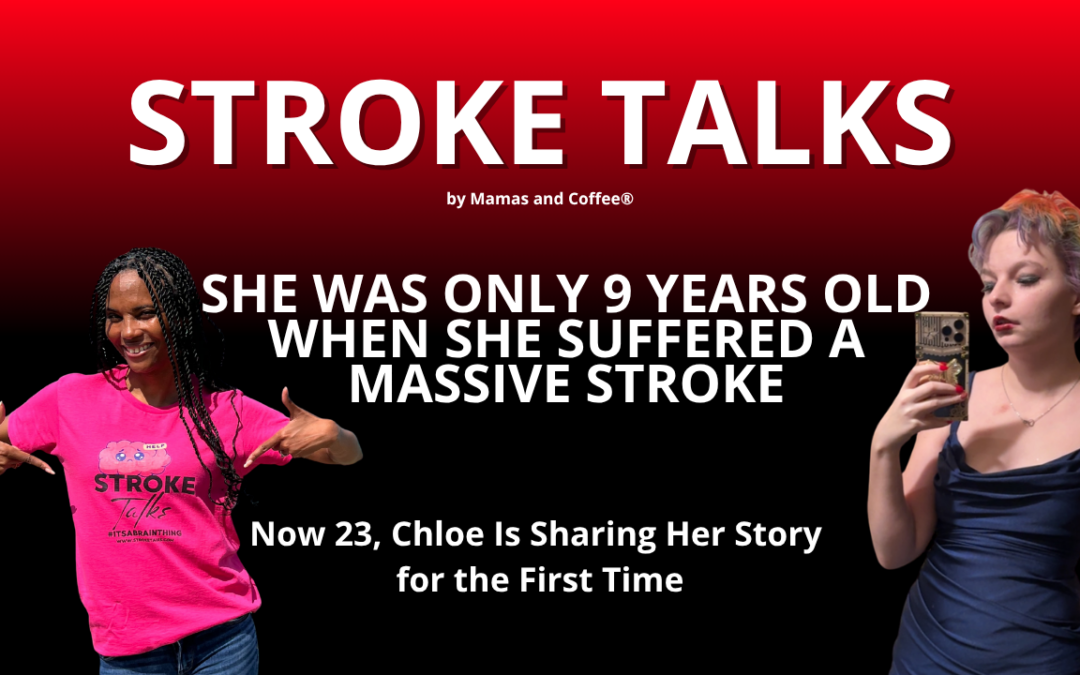
As moms, we aren’t thinking about our young child suffering a stroke.
We worry about fevers, broken bones, playground accidents and all the other things that come along with raising children. But a stroke? At nine years old? That probably isn’t even on our radar.
It certainly wasn’t what Chloe’s parents expected when they sent their nine-year-old daughter to school on November 26, 2012. Chloe was excited about trying out for a musical that day. She was thinking about performing, having fun and getting through another regular day of fourth grade.
But that regular school day would change her life forever.
As I sat down to interview Chloe for Stroke Talks, I couldn’t stop thinking that she and my eldest daughter are the same age.
That stayed with me throughout our entire conversation.
My daughter and Chloe are both young women beginning their adult lives, but Chloe has been living with the effects of a stroke since she was nine years old. As a mom, my mind immediately went to the phone call her parents received that day. I thought about the fear, confusion and helplessness they must have felt after sending their daughter to school for what was supposed to be an ordinary day.
When Chloe and I first spoke before the interview, I cried after we got off the phone. I kept thinking about my own daughters and how stroke was never one of the things I imagined could happen to them as young children.
But it can happen, and that is exactly why Chloe’s story needs to be heard.
It Started With a Headache at Recess
During recess, Chloe developed a terrible headache. She described it as intense pressure that kept hitting one area of her head. Then she fell.
Her best friend asked if she was okay, but Chloe couldn’t speak. She tried to make her way toward the school nurse but couldn’t even get halfway across the pavement before collapsing.
The adults around her initially thought she might be having a seizure or had simply passed out. An ambulance was called, and Chloe’s father received the call no parent ever wants to receive: his daughter had been taken to the hospital.
At first, Chloe’s family was told she was fine. But her mother knew something wasn’t right.
Chloe was delirious. She didn’t know who she was and was saying her sister’s name instead of her own. At one point, a nurse suggested she might be under the influence of drugs.
Yes, they were talking about a nine-year-old child.
Hours later, after an MRI, doctors entered the room with tears in their eyes and told Chloe’s parents that their daughter had suffered a massive stroke.
A stroke. At nine years old.
Waking Up to a Completely Different Life
Chloe woke up about a week later. She didn’t recognize her parents, and she couldn’t move the right side of her body.
She had gone from being an active fourth grader preparing to audition for a musical to being a child in a hospital bed who needed to relearn how to walk, talk and complete everyday tasks.
Imagine being nine years old and hearing BE FAST repeatedly—not as a school lesson, but as instructions for what to do if another stroke happens.
Balance. Eyes. Face. Arm. Speech. Time.
At nine, Chloe should have been thinking about playing outside and watching television. Instead, she was learning stroke warning signs while sitting in a wheelchair.
Further testing later revealed that Chloe had a hole in her heart. Her family had been told when she was born that it would likely close on its own, but it remained. Chloe would need heart surgery on top of everything she had already experienced.
When her parents told her she needed another operation, Chloe cried. She was tired of surgeries, hospitals and procedures. She was a little girl being asked to carry something most adults would find overwhelming.
Learning Everything Again—With Her Other Hand
Before her stroke, Chloe was right-handed. After the stroke affected her right side, she had to learn how to do everything with her left hand.
Writing. Eating. Picking things up. Baking. Getting dressed. All the little things we do without giving them a second thought suddenly required practice and determination.
Within about a month, she was learning to write and function with her left hand.
Her father helped her recognize just how big that accomplishment was. When Chloe felt frustrated, he reminded her that she had taught herself to do nearly everything with her nondominant hand in a matter of weeks.
She also had to relearn how to walk.
One day, Chloe decided she was ready. She pulled herself up using the curtains in her rehabilitation room and began walking. She fell, pulled herself up, and tried again.
When her mother entered the room, Chloe proudly announced, “Hey, Mom. Look what I can do.”
Her mom immediately moved to help, but Chloe wanted to do it herself.
“If I fall, that’s okay. I’ll get back up.”
That determination was already showing itself, even if Chloe didn’t always recognize it at the time.
Going Back to School Was a Different Kind of Recovery
Physical therapy, occupational therapy and speech therapy were only part of Chloe’s recovery. Eventually, she had to return to school and face something else: being different.
She had spent years around other children with disabilities during her rehabilitation. When she returned to public school, she expected to find other children like her.
Instead, she quickly noticed that she stood out.
She wore a leg brace to help with balance. Her right hand moved differently. Other children asked what was “wrong” with her. Some didn’t believe she had experienced a stroke because, in their minds, strokes only happened to older people.
The tween and teenage years can already be rough. Add a disability, aphasia, physical accommodations and classmates who don’t understand, and those years can become incredibly lonely.
Chloe was bullied. She sometimes couldn’t participate in the same activities as everyone else, and she hated that nearly everything required an accommodation. At times, adults made decisions about what she could or couldn’t do without asking Chloe or consulting her parents.
She wanted what most children want—to be included, have friends and feel “normal.”
Aphasia Does Not Mean a Lack of Understanding
Chloe also developed aphasia following her stroke.
Aphasia can affect a person’s ability to speak, find words, read or communicate. It does not automatically mean the person cannot understand what is being said.
Chloe understands. Sometimes she needs extra time to find the word she wants or connect the thoughts in her brain with the words coming out of her mouth.
That distinction matters.
People have spoken slowly to her, underestimated her abilities or assumed she couldn’t understand. Those reactions can be frustrating and hurtful—especially when the person standing in front of you knows exactly what they want to say but needs an extra moment to say it.
During presentations at school, Chloe would read her material repeatedly because she was terrified of making a mistake. That fear hasn’t completely disappeared, but it hasn’t stopped her from wanting to perform, sing, speak publicly and share her story.
The Day Chloe Finally Shared Her Story
For years, Chloe kept her stroke story mostly to herself.
That began to change during a high school health class. The class was learning about strokes when another student made an insensitive joke. He didn’t know Chloe’s history, but his comment hit close to home.
Chloe looked at him and said, “I had a stroke.”
The entire classroom went silent.
She left the room crying, but her teacher encouraged her to come back and share her story. When she did, her classmates listened. Some cried. The student who made the comment apologized and became someone who stood up for her.
Even one of the girls who had bullied Chloe was moved to tears after hearing what she had survived.
That experience helped Chloe realize the power of telling her story. People could no longer look at her differences and create their own explanations. They had an opportunity to understand the person behind them.
Graduating on Time Was Personal
Chloe missed approximately two and a half years of school because of her stroke and recovery.
At one point, she was told she might have to graduate with her younger brother’s class.
Her response was basically, “Oh, hell no.”
And honestly, I respect it.
Chloe worked hard, caught up, and graduated with her original class in 2021. She didn’t simply graduate on time; she graduated with honors. That is not Chloe “being cocky.” That is Chloe giving herself credit for something she worked incredibly hard to accomplish. We should all be willing to pat ourselves on the back a little more often.
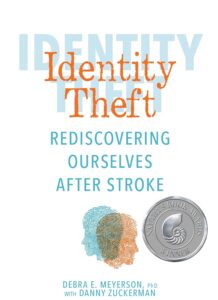
Identity Theft: Rediscovering Ourselves After Stroke
Identity Theft by Debra Meyerson explores the emotional side of stroke recovery, including the difficult question, “Who am I now?” It offers hope and honest insight for survivors, families and caregivers rebuilding life after stroke.
Shop Identity Theft on Amazon
As an Amazon Associate, I may earn from qualifying purchases at no additional cost to you.
We Cannot Ignore Mental Health After Stroke
Content note: This section mentions depression, self-harm and suicidal thoughts.
Chloe spoke openly during our conversation about the emotional impact of having a stroke so young. She experienced anger, depression, panic attacks, loneliness, self-harm and suicidal thoughts during her teenage and young-adult years.
She also lost her sister and later her father, adding grief to pain she was already carrying.
There were times when Chloe believed no one would care if she were gone. She entered psychiatric hospitals, tried different medications, and struggled to find consistent mental health care.
Today, she is working with a therapist and psychiatrist. She says she still experiences depression, but she is more accepting of herself and is in a much better place.
Her story highlights something we must talk about more often: stroke recovery cannot focus only on whether someone can walk, talk or use their hands. Doctors, therapists and families often put tremendous energy into physical, occupational and speech therapy and understandably so. But what is happening emotionally?
What does it feel like for a child to lose the life and abilities they once knew? What happens when that child returns to school, feels different from everyone else and becomes a target for bullying? Who helps them process the fear of another stroke?
Mental health care should not be treated as an afterthought in stroke recovery.
If you or someone you know is struggling with thoughts of suicide or self-harm in the United States, call or text 988 for immediate crisis support. If there is immediate danger, call 911 or go to the nearest emergency room.
People Don’t Need to Be “Fixed”
One of the strongest messages Chloe shared was simple: people with disabilities do not need strangers trying to fix them.
They also don’t need pity, invasive questions, or comments such as, “You’re too pretty to be disabled.” Yes, someone actually said that to Chloe.
She wants people to see her as a human being not as a tragedy, an inspiration project or someone who cannot understand what is happening around her.
Support can look like listening. It can look like asking what someone needs instead of deciding for them. Sometimes it means allowing someone to be angry, sad or frustrated without rushing in with an inspirational quote.
Even well-meaning words can hurt when they dismiss what a person is feeling.
Sometimes the most supportive thing we can say is, “I’m here. I’m listening. You don’t have to pretend with me.”
Celebrating Her Stroke Anniversary Her Way
For the first few years, Chloe felt sad when her stroke anniversary arrived. Now, she celebrates it as a second birthday.
She wears a sash. She gets a cake. She celebrates loudly. Not because she wants anyone to feel sorry for her, but because November 26 marks the day her life changed and the life she continues to live.
There will always be people who don’t understand why stroke survivors acknowledge or celebrate their stroke anniversaries. But every survivor gets to decide what that date means to them.
If Chloe wants a sash, let that woman wear her sash!
She has earned the right to honor her life in whatever way brings her joy.
Chloe Is Still Writing Her Story
Today, Chloe is 23. She loves singing and performing and wants to return to the stage. She hopes to become a public speaker and mental health advocate.
She wants young stroke survivors to see someone they can relate to. She wants better representation of disabled people in television and movies and she would gladly volunteer to play the role herself.
Most importantly, she wants other survivors to know they are not alone.
Chloe’s stroke changed her life, but it did not erase her personality, humor, dreams or voice. Her story includes grief, anger, fear and some incredibly difficult moments. It also includes graduation, friendship, love, laughter, advocacy and the courage to tell the truth.
As mothers, we may never imagine receiving a call saying our child has suffered a stroke. But pediatric strokes do happen. Children can have strokes. Teenagers can have strokes. Young adults can have strokes.
That is why Chloe’s story matters.
Not so we live in constant fear, but so we stop dismissing stroke simply because someone is young. So we recognize the warning signs. So we listen when something is wrong. And so young survivors like Chloe grow up knowing they do not have to navigate this journey alone.
Chloe Will Return to Stroke Talks
There is so much more to Chloe’s story than we could cover in one conversation.
She will be returning to Stroke Talks to talk more about life after a childhood stroke, including relationships, dating, independence and navigating young adulthood as a stroke survivor.
And yes, we may even invite her boyfriend to join us because relationships after stroke deserve their own honest conversation.
I look forward to welcoming Chloe back and allowing her the space to continue sharing her story in her own way—and in her own words.
Watch Chloe’s Full Stroke Talks Interview
This blog post shares only part of our nearly two-hour conversation. In the full interview, you’ll hear Chloe tell her story with honesty, emotion, humor and absolutely no pretending.
Watch Chloe’s full Stroke Talks interview here
After you watch, please leave Chloe an encouraging comment and share the interview. Her story may help another young stroke survivor or a parent searching for someone who understands feel a little less alone.
Thank you, Chloe, for trusting Stroke Talks with your story and reminding us that there is no single age, appearance or experience that defines a stroke survivor.
Help Keep Stroke Talks Going
Stroke Talks creates space for honest survivor stories, supportive virtual & in-person events, and helpful stroke awareness resources. If this article encouraged you, helped you feel understood or taught you something new, consider buying Stroke Talks a coffee. Every cup helps me continue these conversations and keep our community connected.
Thank you for helping more stroke survivors, families and caregivers know they are not alone.
Support Stroke Talks

 Do you want to join a fun, supportive group of women? Come on over to our supportive, loving and fun facebook group. Mamas and Coffee® is all about the REAL of womanhood. Join Us.

Know You Be You Love You® message to empower others in life.
- Are We Raising Kids Who Can Handle the Real World? - September 26, 2026
- Sickle Cell Disease and Stroke in Children: What Parents Should Know - September 8, 2026
- A Stroke at Nine Years Old: Chloe’s Story of Survival, Growing Up and Finding Her Voice - August 27, 2026