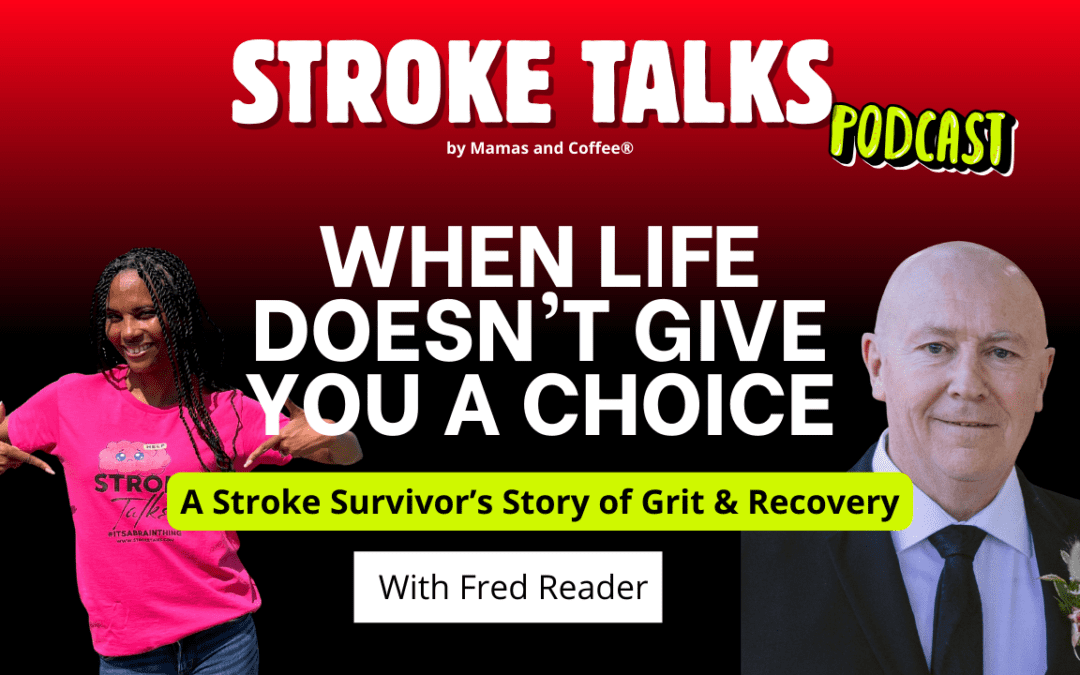
As many of you know, I am the lady behind Stroke Talks. After my own stroke, I realized that we need a space to talk about the things people don’t see—the invisible struggles, the frustration of aphasia, and the importance of finding your “people.”
Meet My First “Strokie Friend” from Down Under
Today, I’m introducing you to a very special individual. Meet Mr. Fred Reader. Fred joined me all the way from Australia (at 5 a.m. his time!) to share his journey. Fred was my very first “Strokie friend”, the first person I met on a Zoom call after my stroke who made me feel like I wasn’t alone.
Key Takeaways from Our Talk:
- Strokes Don’t Always Have a “Warning”: Fred walked 7km and felt great just hours before his stroke. It reminds us that a “brain attack” can happen even when you feel at your best.
- The Reality of Aphasia: It isn’t a loss of intelligence; it’s a loss of access. We talk about the frustration of knowing the word but being unable to grab it.
- The “Invisible” Struggle: Just because you don’t have a “stroke walk” or a facial droop doesn’t mean your recovery is over.
- Social Battery Exhaustion: Why one hour of “normal” conversation can lead to two days of brain fog and fatigue.
- The Power of “Strokie” Friends: Why talking to someone who has “been there” is often the best medicine for the soul.
When Life Changes in an Instant: Fred’s Stroke Story
One of the most shocking things about Fred’s story is how “normal” his stroke day started. He woke up, drove his car to be serviced, and walked 7km home along the river. He felt perfectly fine. But as soon as he walked through his front door? Everything went blank.
The Heart-Stroke Connection
Fred woke up in a hospital bed with his family surrounding him, wondering what on earth had happened. We dive into his history—a previous heart attack, a quadruple bypass, and a defibrillator. For Fred, his heart had a malfunction that sent a blood clot straight to his brain.
Understanding Aphasia: When the Words Get Stuck
Fred and I spent a lot of time talking about Aphasia. If you aren’t familiar with the term, it’s a language disorder that affects your ability to communicate.
The “Internal Dictionary” Struggle
Fred described it perfectly: “It’s like living with a dictionary biting through your head.” We laughed because we both relate to that “loading” icon spinning in our brains. You have the first three words of a sentence and the last two, but that one middle word is just… gone.
<script async src="https://pagead2.googlesyndication.com/pagead/js/adsbygoogle.js?client=ca-pub-7840618423387400"
     crossorigin="anonymous"></script>
<ins class="adsbygoogle"
     style="display:block; text-align:center;"
     data-ad-layout="in-article"
     data-ad-format="fluid"
     data-ad-client="ca-pub-7840618423387400"
     data-ad-slot="8348519373"></ins>
<script>
     (adsbygoogle = window.adsbygoogle || []).push({});
</script>
The Myth of the “Stroke Look”
This is the phrase that drives stroke survivors crazy: “But you look so good!” Because Fred and I don’t have a visible “stroke walk” or a facial droop, people often dismiss our struggle.
Social Fatigue and the “Brain Reset”
Just because you can’t see the deficit doesn’t mean it isn’t there. For Fred, it’s the internal exhaustion. He can be “switched on” for an hour or two at a social gathering, but then his brain shuts down for days afterward.
Finding Humor in the Recovery Journey
Fred gave me permission to feel my emotions—to be angry, to be sad, and most importantly, to laugh at myself. Whether it’s joking about holes in our socks or trying to catch a musical beat that just isn’t there anymore, having a friend who gets it is the best therapy.
Join the Stroke Talks Community
I am on a mission to share as many stroke stories as possible to help survivors feel less alone. We are stronger together!
Support the Mission! ☕
If you find value in these conversations and want to help me reach more stroke warriors, consider supporting the mission. Every “coffee” helps us keep the cameras rolling!
Be sure to like, subscribe to the new Stroke Talks YouTube channel, Stroke Talks newsletter, and share this post. If you’re a survivor or a caregiver, drop a comment below—I’d love to hear from you!

 Do you want to join a fun, supportive group of women? Come on over to our supportive, loving and fun facebook group. Mamas and Coffee® is all about the REAL of womanhood. Join Us.

Know You Be You Love You® message to empower others in life.
- Sickle Cell Disease and Stroke in Children: What Parents Should Know - September 8, 2026
- A Stroke at Nine Years Old: Chloe’s Story of Survival, Growing Up and Finding Her Voice - August 27, 2026
- Trad Wife? Yeah…Let’s Talk About It. - August 14, 2026